
Multilingual Desktop Publishing (DTP) Services
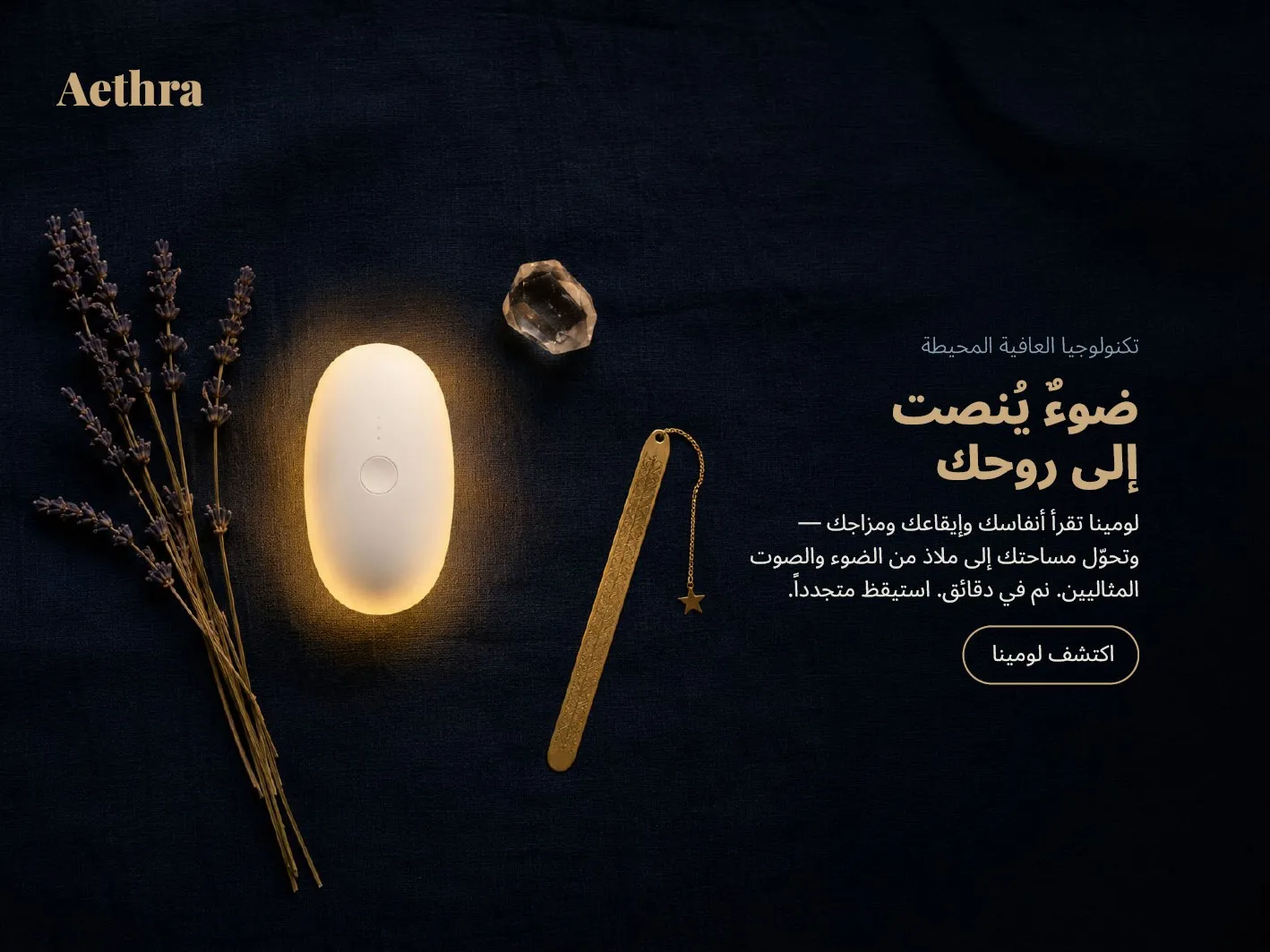
Showcase: Aethra Lumina in four languages
One luxury editorial layout adapted from English into Arabic, Chinese and Spanish, keeping the brand identity consistent across both reading directions and three scripts. For a page-by-page walkthrough of right-to-left mirroring and CJK typesetting, see the Multilingual DTP Sample.
- EnglishSource · LTR
- ArabicMirrored · RTL
- ChineseCJK · LTR
- SpanishAdapted · LTR

The whole composition mirrors
The logo, text block and alignment move to the opposite side, and the reading flow reverses. Diacritics are used where they suit the tone of luxury brand copy and left out where they would feel too formal.


What agencies say
Onur was hands-down the best DTP expert we ever worked with. Detail-oriented, deadline-driven and a true problem-solver. We've done many complex design projects and he has always come up with creative solutions. He never misses a deadline: a must for tight deadlines and large-volume projects.
Mr. Ilter proved to be a highly responsible and motivated person, able to handle short-term orders and high workload. He is always going the extra mile, something highly appreciated by us as well as our clients. I can highly recommend him at any time.
Onur is highly accurate, reliable and responsive. We outsource regularly and are very satisfied with the services provided.
Have files ready for layout?
A free assessment comes back with a quote, a timeline per language and any risks spotted in the source file.
Arabic and right-to-left DTP
Arabic, Farsi, Urdu and Hebrew layouts are rebuilt for right-to-left reading. The composition mirrors, and every mixed-direction detail is checked, from English product names to numbers, URLs and email addresses. For the InDesign side, see how to set up InDesign for Arabic and Hebrew.
What changes when a layout goes right-to-left
- Mirrored compositionLogos, images, sidebars and columns move to the opposite side.
- Indents, bullets and tabsRebuilt for right-to-left, because InDesign doesn't mirror them on its own.
- Page flowBooks bind on the right; fixed-layout documents keep their page order.
- Directional iconsArrows and progress markers flipped where they show direction.
- Mixed directionEnglish words, numbers and URLs stay left-to-right, set in a matching Latin font.
- JustificationArabic is justified with kashida letter extension where suitable, alongside word spacing.
- DigitsWestern or Arabic-Indic digits to suit the market; Farsi and Urdu have their own digit forms.
- FontsChosen for full coverage of Arabic, Persian and Urdu letters.
Text that looks right can still be broken
Some builds of widely used Arabic fonts display perfectly but store the letters so that copying, search and screen readers get the wrong characters. Arabic fonts are screened before layout, and every Arabic PDF is checked after export, as standard.
Languages and scripts covered
Layout in more than 40 languages, grouped here by script. Other languages are possible as long as your translators or proofreaders can review the layout.
Latin script LTR
Albanian, Bosnian, Croatian, Czech, Danish, Dutch, English, Estonian, Finnish, French (France, Canada), German, Hungarian, Indonesian, Italian, Latvian, Lithuanian, Malay, Maltese, Norwegian, Polish, Portuguese (Portugal, Brazil), Romanian, Serbian, Slovak, Slovene, Spanish (Spain, Latin America), Swedish, Turkish, Vietnamese
Cyrillic LTR
Bulgarian, Macedonian, Russian, Serbian, Ukrainian
Greek and Georgian LTR
Greek, Georgian
Right-to-left scripts RTL
Arabic (Modern Standard, Gulf, Levantine, Egyptian), Farsi, Urdu, Hebrew
Devanagari LTR
Hindi
CJK LTR
Chinese (Simplified, Traditional, Hong Kong), Japanese, Korean
Southeast Asian scripts LTR
Thai, Khmer, Burmese
Typography rules by language
These are the typography rules applied most often. To estimate expansion before layout, try the Text Expansion Calculator.
| Language | What changes |
|---|---|
| German | Often up to around 35% longer than English. Long compound words need German hyphenation, and a spaced en dash (–) replaces the long English dash. |
| French | Non-breaking spaces before : ; ! ? and inside « » guillemets. Canadian French uses fewer of these spaces. |
| Arabic | Kashida justification, Western or Arabic-Indic digits, and left-to-right English words and numbers inside right-to-left text. |
| Farsi and Urdu | Additional letters and their own digit forms, which the chosen font must support. |
| Hebrew | Right-to-left, with vowel points usually left out of body text. Numbers and Latin text stay left-to-right. |
| Chinese | No spaces between words, full-width punctuation, line-breaking rules that keep certain punctuation off line starts and ends, and a double-width dash (⸺). |
| Japanese | Line-breaking rules (kinsoku) and character spacing rules (mojikumi), including space between Japanese and Latin text. |
| Korean | Uses spaces between words, unlike Chinese and Japanese, and lines usually break between words. |
| Hindi | Conjunct letters and vowel signs need a text composer that shapes them correctly, and the exported text is checked for broken or doubled vowel signs. |
| Thai, Khmer, Burmese | No spaces between words, so line breaks need language-aware breaking to avoid splitting words. |
Multilingual DTP FAQ
How much does multilingual DTP cost?
DTP for InDesign files starts at €4 per page for each language version, with two revision rounds included. PDF, Word, PowerPoint and Illustrator files are assessed first, because the effort depends on how the file was built. The free assessment gives you a quote based on the actual file.
Do you translate or proofread the text?
No. Translation and proofreading stay with your linguists, and DTP starts from the proofread text. Text changes during layout are kept to a minimum, so the approved translation isn't altered. Your translators then review the laid-out files for line breaks, hyphenation and anything the layout may have affected.
Which file formats do you work with?
InDesign files are the standard: a packaged INDD with links and fonts, or the translated IDML from your CAT tool. Illustrator, Word and PowerPoint files are laid out too. When only a PDF exists, the layout can be rebuilt; see translating PDF files with an InDesign workflow and INDD vs IDML for translation.
How long does DTP take?
It depends on how the file was built. A well-prepared file with consistent paragraph styles, master pages and room for expansion moves fast: a 30-page translated file can be finished in a few hours. Right-to-left languages can double that, because the whole page is rebuilt. Timelines are quoted per language and for the whole project.
How many languages can one project include?
There's no fixed limit. Most projects run in 5 to 30 languages, and every version is laid out from the same source so all of them stay consistent.
How do revision rounds work?
Each language version goes to your translators as a PDF. Corrections are marked as PDF comments, or in a separate list with page and position. Two revision rounds and the final delivery are included. New text, rewrites or amendments after final delivery may be quoted separately.
What if the translation doesn't fit the layout?
Expansion is absorbed in the layout first: frame fitting, hyphenation and spacing within typographic limits. If text still can't fit without harming readability, it goes back to your linguists to shorten. Text is never cut or rewritten during DTP. See overset text after translation.
What happens when the brand font doesn't support a language?
The brand font is kept wherever it covers the language. Where it doesn't, a visually matching font is proposed and agreed with you before layout, with licensing in mind. See fonts in multilingual DTP.
Do you work with our CAT tool?
Yes. Translated IDML from Trados Studio, memoQ or other CAT tools is laid out directly. Hyperlinks and cross-references are checked after the round-trip, because translation tools can change them without any warning.
Can the translated PDFs be made accessible too?
Yes. Accessibility can be built into the InDesign source before translation, so every language version inherits it. See the PDF accessibility remediation service.
Can you work under an NDA?
Yes. An NDA can be signed before any files are shared.
Related services and projects
Further reading on multilingual DTP
- How to prepare an InDesign file for translation
- How to set up InDesign for Arabic and Hebrew
- Fonts in multilingual DTP: why they break and what to use
- INDD vs IDML for translation
- Translating PDF files: the InDesign workflow
- DTP rate per page: what to expect
- Tips and tricks for multilingual publishing
Have a multilingual DTP project?
Send your files for a free assessment. You'll get a quote, a timeline per language and in total, and any risks spotted in the source file.
Request a free assessment → Prefer to prepare a brief first? Use the Project Brief Generator